
WRITINGS ON THE WALL
Li fe as we know it could easily end at a moment’s notice or it could continue its snowball roll to destruction. Our society is crumbling before our eyes. The signs are everywhere, from the national debt and inflation of the dollar to the daily intrusions into our private lives, the loss of parental control of our children’s education, to an all-out assault on the principles that founded our republic.
To say “we’ve read the end of the Book and know how it turns out” should not excuse any of us from being prepared and knowing when to take shelter from a coming storm.
Heads up! Stay Alert! Stay Informed! Don’t trust the Main Stream Media! Do your own homework!
I’d like to ask you some questions:
I’m going to pose some questions for which I don’t have answers and I challenge each of you to also ask yourselves these questions. When we talk about being self-reliant we are generally referring to “How will I survive a disaster?” or “how will I keep my family and my property safe in time of a crisis?” or “how will I cope in an ever changing world?”
The questions I’m posing are geared more toward helping each of us better answer the questions above. I want to assess, to the best of my ability, the various possible threats:
- Is it possible? Could this even actually happen?
- Is it probable? What is the realistic likelihood of such an event? What are the odds?
- How will an event affect me and my family?
- How do I plan to respond if such an event should occur?
Please review the following disaster scenarios and rate them from most likely to least likely with #1 being the most likely. This survey is primarily for your benefit in making plans for an eventual disaster. Any information or insight that you gain that you wish to share will be helpful in planning upcoming meetings.
The following is a list of possible disasters:
Financial collapse/Melt down of the economy
The once mighty dollar is now in jeopardy of losing its value as an international trading instrument. A daily trip to the grocery store will attest to the falling value of our dollar due to runaway inflation. Foreign traders are becoming reluctant to accept U.S. dollars and are demanding Euros, or Gold, etc.
Tornado
Mid-Missouri is in “Tornado Alley” and every summer we watch the sky and listen to the news, keeping ever vigilant for the threat of severe weather.
Earthquake
The largest earthquake in U.S. history occurred along the New Madrid fault line. The earthquake was so violent that it rang church bells and cracked plaster on the east coast. Since 1974 there have been more than 4000 earthquakes reported along the New Madrid line. We are approximately 220 miles from the center of New Madrid activity.
Civil disturbance
Many might remember the fires, looting and rioting following the assignation of Rev. Martin Luther King, Jr. and the Rodney King incident. It is easy to suggest today, that our nation is more divided today than any time since the War Between the States. What would happen if the government entitlement programs are no longer able to put checks in the mail? What would happen if martial law were to be declared on a large scale?
EMP Event
Solar Flares and their effect on electronic devices have been know and observed by scientists for decades. In times of exceptionally large solar flare activities, there is a considerable amount to disruption of all communication equipment.
A super solar storm was observed in 1859 and documented by English astronomer, Richard Carrington. The event, dubbed the Carrington event, disrupted telegraphy around the world and the northern lights, or Aurorae, were also seen around the world, even as far south as the Caribbean. Astronomers have speculated that we are due for another super solar storm in the not too distant future.
Also, it is important to note, the detonation of a nuclear device will produce a similar affect.
Terrorist attack
Terrorist attacks have become a common occurrence in many countries around the world and far too frequently here in our homeland. How will our protectors; local, state and federal, respond to a large scale organized assault on our cities, such as conducted in Spain?
Ice Storm
Global warming aside, we are experiencing winters like our parents and grandparents talked about. Ice storms may become more frequent and cause a temporary interruption of most goods and services. Are we prepared to go days or weeks without power and water?
Nuclear plant malfunction
Nuclear power has proven to be safe and reliable but the fear of a Three Mile Island or a Chernobyl reactor incident are in the minds of many in spite of the numerous safeguards. Regardless of safeguards, there is always the human error factor and a very major problem could conceivably occur. The effects might be devastation to the surrounding area.
What will we do? How will we cope? Are we prepared to go for days or weeks without electricity or water? Do we have enough food and water stored for 3 days, 3 weeks or longer? How will we live if the store shelves are empty and there is no good guess when service will be restored?
What is your bottom line worst case scenario and are you prepared?
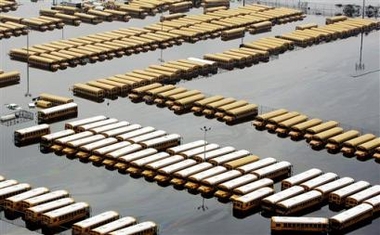
Will we be self-reliant or will we get on the FIMA bus and depend on government programs to provide for us?
A Commentary by Walter Williams:
“People want government to do all manner of things, things that if done privately would lead to condemnation and jail sentences. Some want government to give money to farmers, poor folk, college students, senior citizens and businesses. There’s no Santa Claus or tooth fairy. The only way government can give money to one person is to forcibly take it from another person. If I privately used the same method to raise money for a “deserving” college student, homeless person or businessman, I’d face theft charges. Others among us want government to protect wild wolves, bears and the Stephens kangaroo rat even if it results in gross violations of private property and loss of lives. The problem is that some people disagree with having their earnings taken to satisfy someone else’s wishes. They don’t want the Corps of Engineers and Fish and Wildlife Service dictating to them what they can and cannot do with their property to ensure a habitat for the kangaroo rat. Force and threats must be used. Here’s the question: Could the average American kill a person who resolutely refuses to give up his earnings so Congress can give it to farmers? Could you kill a person who insists on using all of his property, even though some wolves have set up a den on it? You say, “What do you mean, Williams — kill?” Here’s the scenario: The Corps of Engineers commands me not to remove debris from a drainage ditch on my property, placed there by beavers building a dam, because the debris creates a wetland. I remove it anyway. The Corps of Engineers fines me. I refuse to pay the unjust fine. The Corps of Engineers threatens to seize my land. I say no, you won’t: it’s my land, and I’ll protect it. A politician sends marshals to take it, and I get killed defending it.”
— Walter E. Williams
(1936- ) Columnist, Professor of Economics at George Mason University
Self-Reliance Group Newsletter
EPA’s Wood-Burning Stove Ban Has Chilling Consequences
I don’t know which agency of government is the more destructive to the fabric of our once  great Republic, the Department of Education (ED) or the Environment Protection Agency (EPA). It might be easier to argue that the
Both agencies are exercising regulatory powers that go far beyond their intended purpose or educating our children or protecting our environment. They seem to be free from Congressional oversight to make regulations that will greatly impact our everyday lives and the future of our society, our children.
We all want to protect our environment and are concerned for the education of our youth, but one could safely state that the focus of ED and EPA missions’ has shifted from education and protection to indoctrination and control.
In this newsletter, I wanted to focus on an article that was sent to me by a “prepper” associate as it deals more directly with being self-reliant. (Editor comment)
EPA’s Wood-Burning Stove Ban Has Chilling Consequences For Many Rural People
It seems that even wood isn’t green or renewable enough anymore. The EPA has recently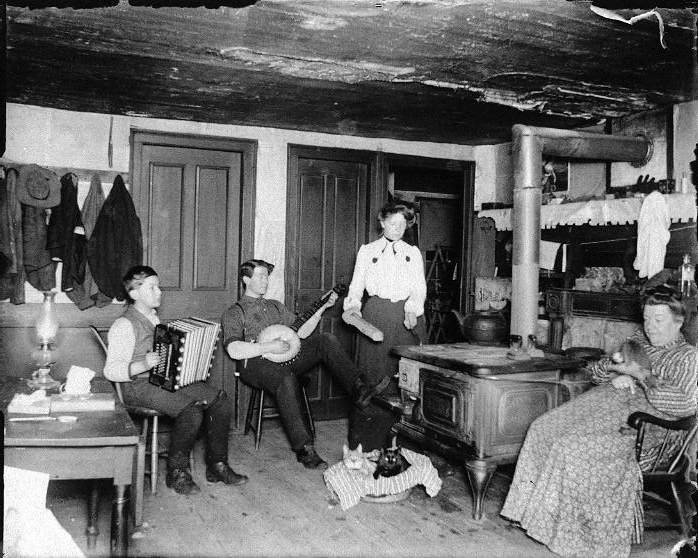 banned the production and sale of 80 percent of America’s current wood-burning stoves, the oldest heating method known to mankind and mainstay of rural homes and many of our nation’s poorest residents. The agency’s stringent one-size-fits-all rules apply equally to heavily air-polluted cities and far cleaner plus typically colder off-grid wilderness areas such as large regions of Alaska and the American West.
While EPA’s most recent regulations aren’t altogether new, their impacts will nonetheless be severe. Whereas restrictions had previously banned wood-burning stoves that didn’t limit fine airborne particulate emissions to 15 micrograms per cubic meter of air, the change will impose a maximum 12 microgram limit. To put this amount in context, EPA estimates that secondhand tobacco smoke in a closed car can expose a person to 3,000-4,000 micrograms of particulates per cubic meter.
Most wood stoves that warm cabin and home residents from coast-to-coast can’t meet that standard. Older stoves that don’t cannot be traded in for updated types, but instead must be rendered inoperable, destroyed, or recycled as scrap metal.
The impacts of EPA’s ruling will affect many families. According to the U.S. Census Bureau’s 2011 survey statistics, 2.4 million American housing units (12 percent of all homes) burned wood as their primary heating fuel, compared with 7 percent that depended upon fuel oil.
More on MILK and GRASSROOTS:
Don’t you agree you should know what’s in the food you eat and drink?
The following article is from Paul Hamby, owner and general manager of Hamby Dairy Supply and patriot activist.
A Grass Roots Success Story . . Before the Modern Tea Party
“Monsanto developed a hormone (Rbgh) that makes cows give a little bit more milk. It came to market with little research and a lot of controversy. The synthetic hormone commonly known as rBST or Rbgh (brand name is Posilac) is indistinguishable from the natural hormone from the cows. Japan, Australia, New Zealand, Canada and all 27 nations of the European Union banned Rbgh.
It is legal in the USA. Responding to consumer demand, some producers pledged to not use Monsanto’s synthetic hormone on their cows. They began marketing their milk with a label as Rbgh-FREE MILK. That milk sold very well. The only way for you to know if you are purchasing Rbgh free milk in a store is if the label specifies it.
 Monsanto is a large powerful company. They developed and patented GMO seeds. Monsanto’s lawyers and marketing department devised a plan to go state by state and enact legislation that would ban the labeling of milk as Rbgh-FREE MILK.
They introduced the legislation in about a dozen states in 2008 including Monsanto’s home state of Missouri.
Here in Missouri, there was already a small core of grass roots activists. We were fighting NAIS. We were challenging the Federal government’s national ID card program called REAL ID. Many activists had been fighting to protect private property rights including eminent domain for private use.” Continue reading . . .
A special thanks to Paul Hamby for granting permission to post this informative article. Visit his website here, Link
Roll Grow your own Tobacco
It’s a little difficult to write this topic without having some vivid memories of my 32 years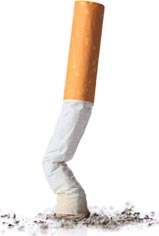 of smoking. I clearly remember my first cigarette and gratefully recall my last. Now, after over 18 years of being smoke free, I’m researching alternative uses for tobacco, the potency of various strains, how to grow it and to turn it into insecticide.
My goal here is to make my own organic insecticide. I’ve used cigarette butts in the past and I know that it seems to work well with squash bugs and cabbage beetles. Not so good with grasshoppers. Choosing the right seed variety seems like a good place to start. (See NOTE at end of this post)
People grow their own tobacco for a variety of reasons. Whilst most people prefer the milder types, there are a few among us that prefer the opposite.
On this site, we have a number of varieties we call “Strong”, because they contain a lot of nicotine, not because they are strong in flavor. We thought it best to highlight these to you, whether you prefer mild tobacco or strong. Or if you’re gardener and want to make your own insecticide, these varieties would be best suited.
What we’d like to emphasize one should be cautious when smoking any of these varieties by themselves.
Aztec Rustica, Isleta Pueblo, Mohawk Rustica, Orinoco & African Red
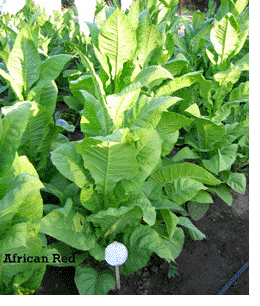 Contrary to popular belief, growing tobacco is perfectly legal almost anywhere in the world. In fact we are not aware of there being any country where it is not allowed.
Growing tobacco is not only fun and easy, it can also save you a fortune. Providing you do not intend to sell your tobacco, you can grow as much as you like.
Start in doors and once your plants leaves are 6 inches in size, they are ready to be planted outside.
Plant outside only after all danger of frost has past. Care should be taken not to disturb the roots. Feed should only be given to established and rapidly growing plants after they have been replanted. Tobacco requires a lot of nitrogen and potash, which can be supplied using standard garden fertilizer. You may want to grow your tobacco using only organic fertilizers.
Ideally, space the tobacco plants about 2 ft. apart in rows 3 ft. apart. Transplant outside in the evening or when it is cloudy and overcast to avoid the youngsters from drying out. Water plants thoroughly after transplanting and water daily until plants become established. Like tomato plants, the branches (suckers, offshoots), should be removed to focus the plants energy on the large leaves.
Tobacco plants generally require full to partial sun to grow properly. Tobacco is ready to be harvest after 60-90 days after planting.
The leaves of Rustica tobacco are often used by home gardeners to make a very effective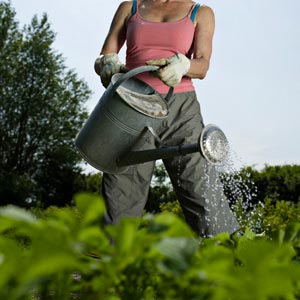 insecticide by soaking them in water to make a “tea”.
As with normal tea, boil water and pour onto the tobacco leaves and leave to stand for a day or so. One last vigorous stir before passing it through a strainer and it’s ready.
The tea is then sprayed onto vegetables and flowers using any misting device and lasts up to six weeks.
Caution: Avoid use of Nicotine spray around Tomatoes, Eggplant, Peppers or any member of the nightshade family, because it may carry some virus diseases of these crops, especially tobacco mosaic virus. (Encyclopedia of Organic Gardening)
Caution: Nicotine spray will kill both beneficial and harmful insects as well as earthworms and other soil organisms. In concentrated form it is highly dangerous to human beings; even physical contact is dangerous. (Encyclopaedia of Organic Gardening)
Note: As of Jan. 1, 2014, Nicotine based insecticides are not allowed. Currently, nicotine, even in the form of tobacco dust, is prohibited as a pesticide for organic farming in the United States. (So . . it must work and be a challenge to the big corporate chemical boys. I’ve used it in the past and will continue to use it where I think it is needed; i.e. squash bug, white fly or aphid infestations. As with any caustic agent, use with caution and wear protection. Writers note.)
Milk and Grassroots
Milk prices could go up as much as 60 cents in March due to supply and demand issues. California’s drought could push the prices up even higher later in the year and into early 2015.

California is sending their cattle to Texas because free market drought stricken Texans have learned to manage their land better than government managed drought stricken California. That’s what I see. Another warning that the United States has ceded their ability to feed their own populations, in large degree, to a state that is going to fall into the sea, and is in fact already drowning in its politburo style politics. Bring back heirloom vegetables, and each home ought to have chickes and cattle in the back yard. You know I’m right.
On the other hand: The Pacific region has grown (despite having the lowest average price) by taking advantage of economies of size by specializing in milking cows. The United States dairy industry is a technologically advanced, well-managed, and economically important sector of United States agriculture. Future challenges include the ability to remain viable economically while dealing with environmental and social sustainability issues in the form of new constraints from formal policies and from consumer perceptions.
 Self-Reliance Group