 Daddy, Where does our food come from?
Grow your own.
<p><a href=”http://vimeo.com/73234721″>SAMSARA food sequence</a> from <a href=”http://vimeo.com/barakasamsara”>Baraka & Samsara</a> on <a href=”https://vimeo.com”>Vimeo</a>.</p>
Water purification
There are two primary ways to treat water: boiling and adding bleach. If tap water is unsafe because of water contamination (from floods, streams or lakes), boiling is the best method.
- Cloudy water should be filtered before boiling or adding bleach.
- Filter water using coffee filters, paper towels, cheese cloth or a cotton plug in a funnel.
Boiling
- Boiling is the safest way to purify water.
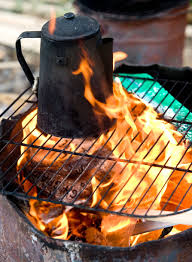
- Bring the water to a rolling boil for one minute.
- Let the water cool before drinking.
Purifying by adding liquid chlorine bleach
- If boiling is not possible, treat water by adding liquid household bleach, such as Clorox or Purex. Household bleach is typically between 5 percent and 6 percent chlorine. Avoid using bleaches that contain perfumes, dyes and other additives. Please read the label. Place the water (filtered, if necessary) in a clean container. Add the amount of bleach according to the table below.
- Mix thoroughly and allow to stand for at least 30 minutes before using (60 minutes if the water is cloudy or very cold).
| Treating Water with a 5-6 Percent Liquid Chlorine Bleach Solution | ||
| Volume of Water to be Treated | Treating Clear/Cloudy Water: Bleach Solution to Add |
Treating Cloudy, Very Cold, or Surface Water: Bleach Solution to Add |
| 1 quart/1 liter | 3 drops | 5 drops |
| 1/2 gallon/2 quarts/2 liters | 5 drops | 10 drops |
| 1 gallon | 1/8 teaspoon | 1/4 teaspoon |
| 5 gallons | 1/2 teaspoon | 1 teaspoon |
| 10 gallons | 1 teaspoon | 2 teaspoons |
Water Storage – Purification Techniques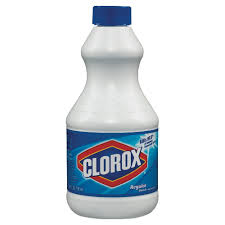
Storing water safely
- Store one gallon of water per person per day.
- Store at least a three-day supply of water per person.
- Collect the water from a safe supply.
- Thoroughly washed plastic containers such as soft drink bottles are best. You can also purchase food-grade plastic buckets or drums.
- Seal water containers tightly, label with date, and store in a cool, dark place.
- Replace water every six months.
- Never reuse a container that contained toxic materials such as pesticides, solvents, chemicals, oil or antifreeze.
- Don’t use empty milk jugs or containers that have held anything non-food such as bleach.
Liquid Clorox Bleach
In an emergency, think of this (one gallon of Regular Clorox Bleach) as 3,800 gallons of drinking water.
Note: You can also Purify Water using Dry Chlorine (Calcium Hypochlorite) or by using Food Grade Hydrogen Peroxide. To find the methods used, google them on the internet.
Dry Chlorine: Also called calcium hypochlorite has the added benefit of extended shelf life. If kept dry, cool and in an airtight container, it may be stored up to 10 years with minimal degradation. It requires less actual storing space than its liquid counterpart.
Only use HTH Pool Shock that does not have any perfumes, algicides or fungicides. Ingredients should reads CALCIUM hypochlorite and inert ingredients. Use a brand with at least 68 to 73% Calcium Hypochlorite. You can get it at pool stores.
NOTE: DO NOT GET THIS FORMULA MIXED UP WITH LIQUID BLEACH!!!
Before you begin mixing any chemicals in any way, please follow basic safety precautions. Make sure you do this in a ventilated area. Do not breathe in any fumes as they are toxic. Have plenty of water to dilute any mistakes. Wear eye protection for splashes. Lastly always mix the powder into the water NOT the other way around.
Add and dissolve one heaping teaspoon of high-test granular calcium hypochlorite (HTH) (approximately 1/4 ounce) for each two gallons of water. (Heaping ½ Teaspoon per gallon)
To disinfect water, add the chlorine solution in the ratio of one part of chlorine solution to each 100 parts of water to be treated. This is roughly equal to adding 1 pint (16 oz.) of stock chlorine to each 12.5 gallons of water to be disinfected.
NOTE: DO NOT GET THIS FORMULA MIXED UP WITH LIQUID BLEACH!!!
 Self-Reliance Group