Disclaimer
The opinions voiced on this site are meant for entertainment purposes only and are hypothetical strategies for a post-apocalyptic setting. They are not meant to replace standard care and advice when modern medical technology and resources are available. No patient-provider relationship exists or is implied between the website owners and readers.
Articles written or comments made by the authors or readers of this blog are not meant as medical advice and should not replace an in-person history and physical by a medical professional. No provider-patient relationship exists or is implied between the readers and the authors of this blog. The practice of medicine or dentistry without a license by a reader of this blog is illegal and punishable by law.

DOOM AND BLOOM website is a great medical resource.
 What to do when HELP is not on the way.
Long-Term-Disaster Diseases
What Is Typhoid Fever? by James Hubbard, MD, MPH
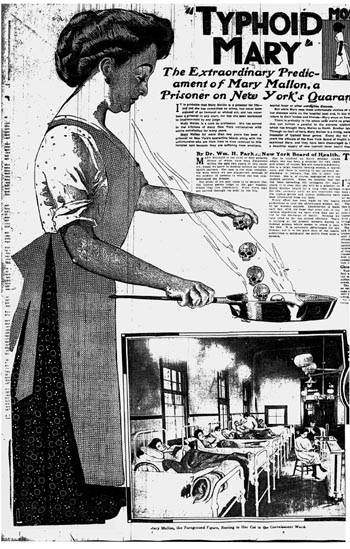 Some diseases that aren’t a big problem in the most industrialized nations now could become a problem during a long-term disaster. This is the second in a series of posts I’m writing about such diseases.
We don’t hear much about typhoid fever in the United States. To most of us, it’s a mysterious disease that we know is serious, but we’re not sure what it looks like. Is it even really a fever?
We need to be able to recognize it, though, because in certain conditions during a long-term disaster, it could spread rapidly. And proper early treatment dramatically lowers your risk of dying from it.
Where Is Typhoid Fever Most Common?
Make no mistake, typhoid fever is still a problem worldwide. In fact, over 20 million people get it each year, mostly in Africa, Latin America, and Asia. India has a particularly high incidence.
What Is Typhoid Fever? Continue reading
Typhus Hits “Revolution”: Could It Hit Here?
 A doctor goes into this tent full of people who look deathly ill, some coughing. He comes out in about a minute and proclaims they all have typhus.
Good diagnostician. But is it realistic? Could you tell that quickly whether people have this disease? And how dangerous is it?
This scene is from the NBC television series Revolution, which is about how a bunch of people cope with life after the grid goes down—permanently. No electricity of any sort. It got me to thinking about typhus since an outbreak is a real possibility in a prolonged disaster situation. In fact, a couple of forms of it are not that uncommon in the United States right now. And in some other countries it’s much more widespread, especially Africa.
So, let’s start at the beginning. What is typhus? Continue reading
New! Living Ready Pocket Manual: First Aid Being prepared for an emergency situation is the first step in ensuring you come through it!
How to Sterilize Instruments
Unless you have a commercial autoclave and a power source, or some prepackaged sterile products, you’re going to have to make do with what you have and sterilize the best you can.
Before you sterilize, always clean any obvious debris off your instruments. Clean with soap and water or alcohol. Use a cloth or brush if needed.
Quick Methods for Sterilization
- Heating the instrument. Hold the part that’s going to touch the injury over an open flame. If the handle is also metal, find something to hold the instrument with so you don’t burn your fingers. Heat until the metal turns red; that’s long enough. Then let the instrument cool, and you’re ready. If I have alcohol, I also like to dip the instrument in that just for good measure.
- Using a disinfectant. If you don’t have fire and you’re in a hurry, you can wipe the instrument off with a clean cloth soaked in iodine, povidone-iodine (Betadine) or alcohol. No clean cloth? Dip the instrument in the solution and stir it for ten seconds.
Sterilization Methods that Take Longer
- Boiling. This is a good method for larger instruments or those that might melt under the flame. Let the instrument soak in boiling water for 20 minutes.
- Use a disinfectant for a longer amount of time. Soaking the instrument in disinfectant for 20 minutes is better than the wiping/dipping method.
Homegrown Herbal Remedies
Labels on store-bought herbs rarely reveal how plants are raised, let alone how long the ingredients are exposed to light and high temperatures while stored in their plastic containers. To ensure the best quality and potency of your herbal remedies: grow your own!

- Mullein (Verbascum thapsus)
Give this handsome and stately biennial plenty of space, and stand back in wonder—the sturdy, yellow-flowered stem will emerge from within a rosette of thick, hairy leaves, reaching skyward nearly six feet! The leaves are commonly added to cough formulas, as mullein’s emollient and expectorant properties help heal bronchial respiratory infections. According to UMMC, a well-strained infusion of leaves alone will ease and loosen a stubborn cough.
 Self-Reliance Group